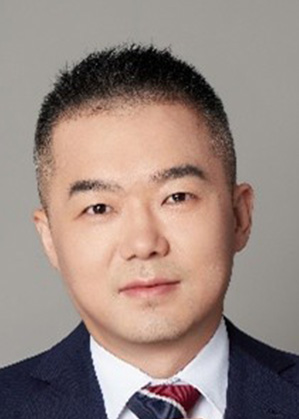
Prof. Zengguang Hou
(Keynote Speaker)
Institute of Automation Chinese Academy of Sciences, China
IEEE Fellow
Biography: Zeng-Guang Hou is professor at the Institute of Automation, Chinese Academy of Sciences (CAS), Beijing. He is also a Key PI of the Center for Excellence in Brain Science and Intelligence Technology (CEBSIT) of Chinese Academy of Sciences (CAS). Dr. Hou’s research interests include computational intelligence, robotics and intelligent systems.
He is a Fellow of IEEE and CAA. He is serving as a VP of the Asia Pacific Neural Network Society (APNNS) and Chinese Association of Automation (CAA). Dr. Hou is an associate editor of IEEE Transactions on Neural Networks and Learning Systems, IEEE Transactions on Cybernetics, and Neural Networks, etc. He was on the Board of Governors of International Neural Network Society (INNS). He was the Chair of Neural Network Technical Committee (NNTC) of Computational Intelligence Society (CIS), IEEE. Dr. Hou was a recipient of IEEE Transactions on Neural Networks Outstanding Paper Award in 2013, and the Outstanding Achievement Award of APNNS in 2017, the Dennis Gabor Award of INNS in 2022, and Neural Networks Best Paper Award in 2022. He has over 30 patents on medical devices. He was awarded the Gold Medal of the International Exhibition of Inventions of Geneva 2021 for rehabilitation robots.
In addition, he has served as an international research fund review expert, evaluating over 60 research proposals from more than 10 countries and regions, including Switzerland, Belgium, and the United Kingdom.
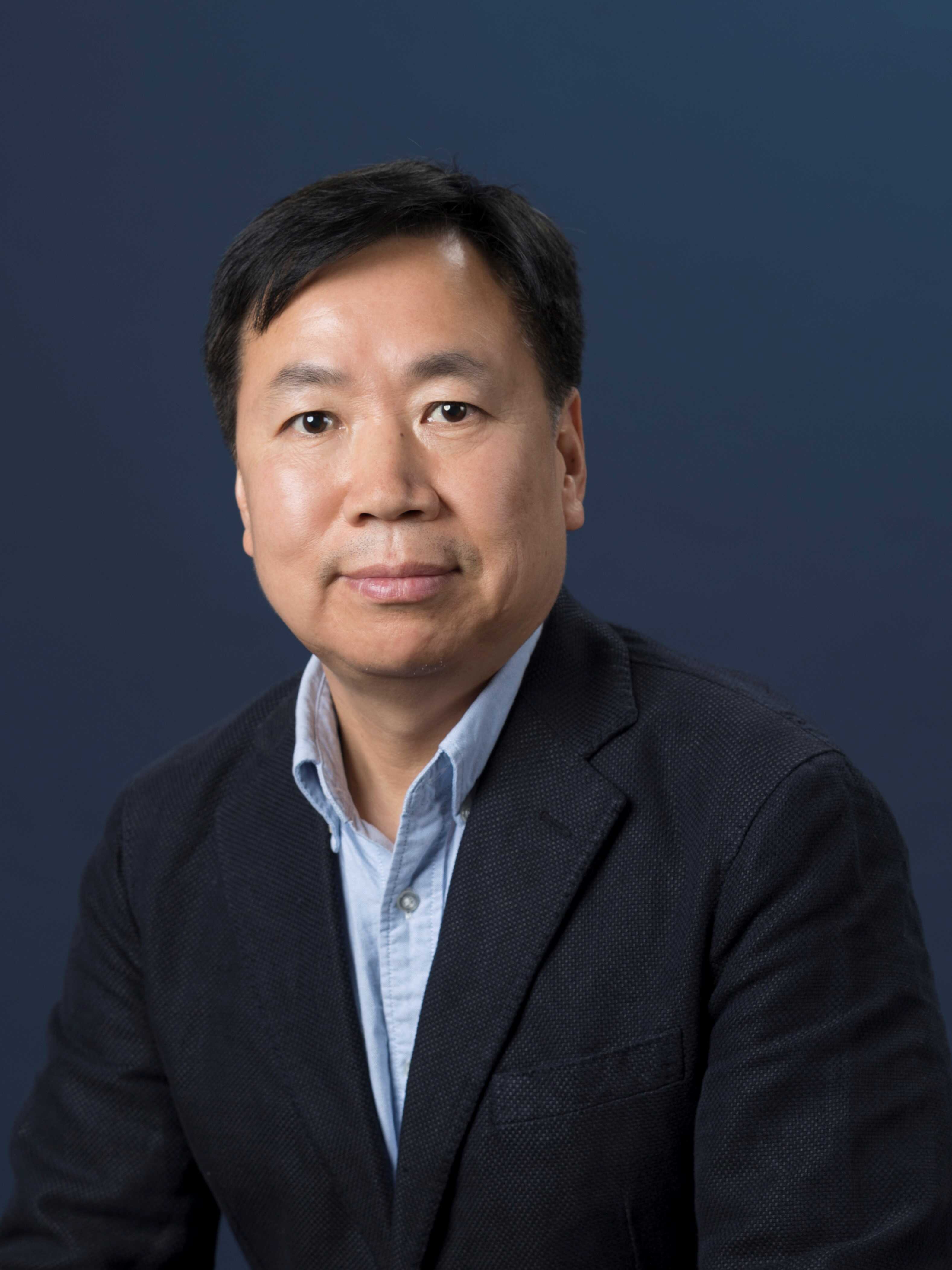
Prof. Cheng Hong
(Keynote Speaker)
University of Electronic Science and Technology of China, china
Keynote Lecture: Frontier Developments in Brain–Computer Interfaces and Intelligent Rehabilitation Robotics
Abstract: Brain–computer interfaces (BCIs) and intelligent rehabilitation robots stand at a critical inflection point, moving from "passive assistance" toward "intention-driven, active rehabilitation." As multimodal EEG/EMG signal decoding, intention perception, and motor-imagery recognition mature, the "central–peripheral–central" neural loop is being closed, shifting exoskeletons, rehabilitation robotic hands, wheelchairs, and similar devices away from program-driven motion and toward neuroplasticity training driven by the patient's own active intent. Drawing on more than a decade of sustained research by the team at the University of Electronic Science and Technology of China (UESTC), this report reviews frontier breakthroughs in rehabilitation BCI across signal acquisition (flexible dry electrodes and high-throughput semi-invasive electrodes), decoding algorithms, tight physical human–robot coupling control, and convergence with embodied intelligence. Taking achievements such as the AIDER walking-assistance exoskeleton for paraplegia—its six generations of iteration, clinical validation, and industrial translation—as a case in point, it examines the practical pathway from technology to clinic to industry. Finally, against the challenges of decoding robustness, individualized adaptation, ethics and safety, and affordable access at the primary-care level, the report outlines the emerging trend of "embodied intelligence fused with brain–computer interfaces," offering perspectives for medical robotics R&D and clinical rehabilitation practice.
Biography: Cheng Hong, Professor and Doctoral Supervisor at the School of Mechanical and Electrical Engineering, University of Electronic Science and Technology of China, holds a Doctor of Engineering degree. He is a Leading Talent in Scientific and Technological Innovation under the National "Ten Thousand Talents Program", Dean of the School of Mechanical and Electrical Engineering, Director of the Ministry of Education Engineering Research Center for Human-Robot Intelligent Technology and Systems, Director of the Robot Research Center at the University of Electronic Science and Technology of China, Vice Dean of the Artificial Intelligence Research Institute, Honorary Director of the Intelligent Rehabilitation Committee of the Chinese Rehabilitation Medicine Association, Director of the Ethics Committee at the University of Electronic Science and Technology of China, and Chairman of the Sichuan Robot Engineering Society. His main research areas include artificial intelligence and robotics.
From July 2000 to November 2006, he served as an assistant lecturer (July 2000), lecturer (July 2002), and associate professor (January 2005) at the School of Electronic and Information Engineering, Xi 'an Jiaotong University, during which he obtained his Ph.D. in Control Theory and Control Engineering from Xi' an Jiaotong University in 2003. From December 2006 to December 2009, he conducted postdoctoral research at the School of Computer Science, Carnegie Mellon University. In January 2010, he became a professor at the School of Automation, University of Electronic Science and Technology of China, where he founded the Institute of Machine Intelligence. In July 2014, he co-founded the Robotics Research Center and served as its executive deputy director, executive director, and director. In June 2017, he became the director of the China FAW-University of Electronic Science and Technology Automotive Artificial Intelligence Joint Laboratory. In September 2018, he was appointed deputy dean of the Institute of Artificial Intelligence at the University of Electronic Science and Technology of China. In October 2019, he assumed the role of director at the Ministry of Education Engineering Research Center for Human-Machine Intelligent Technology and Systems. In February 2021, he became the director of the Ethics Committee at the University of Electronic Science and Technology of China. In July 2025, he was appointed chairman of the Sichuan Robotics Engineering Society.
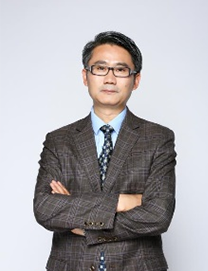
Prof. Hongliang Ren
(Keynote Speaker)
The Chinese University of Hong Kong (CUHK), HKSAR, China
Keynote Lecture: Endoluminal Robotics & Embodied AI in vivo
Abstract: Minimally Invasive Surgeries (MIS) emerging in modern medical treatment have brought new opportunities and challenges for procedure-specific surgical motion generation and the associated motion understanding, which are the foundation of intelligent robotic manipulation and guiding interventions. Image-guided robotic surgery is expected to increase the precision, flexibility, and repeatability of surgical procedures but poses challenges for system development. This talk will highlight our recent developments in dexterous robotic motion generation with motion perception towards intelligent image-guided minimally invasive procedures. The procedure-specific telerobotic surgical systems can assist surgeons in performing dexterous manipulations using continuum motion generation mechanisms with variable stiffness and context awareness.
Biography: Prof. Hongliang Ren is a full professor at the Chinese University of Hong Kong (CUHK) in the Department of Electronic Engineering, where he received his Ph.D. in 2008. He has served as an Associate Editor for IEEE Transactions on Automation Science & Engineering (T-ASE) and Medical & Biological Engineering & Computing (MBEC). He has navigated his academic journey through Chinese University of Hong Kong, Johns Hopkins University, Children’s Hospital Boston, Harvard Medical School, Children’s National Medical Center, United States, and National University of Singapore (NUS).
His areas of interest include biorobotics, intelligent control, medical mechatronics, soft continuum robots, soft sensors, and multisensory learning in medical robotics. He is the recipient of the National Science Fund for Distinguished Young Scholars (Scheme A), CUHK Young Researcher Award, NUS Young Investigator Award and Engineering Young Researcher Award, IAMBE Early Career Award 2018, Interstellar Early Career Investigator Award 2018, ICBHI Young Investigator Award 2019, and Health Longevity Catalyst Award 2022 by NAM & RGC, Best Paper Awards in IEEE-ROBIO (2019 & 2013), IEEE-RCAR2016, IEEE-CCECE2015, IEEE-Cyber2014 among 30+ other prestigious awards.
He has been constantly listed among the world’s top 2% of the most-cited scientists by Stanford University in the career-long category. He has published over 240 papers, accumulating more than 23,000 citations and achieving an H-index of 77.
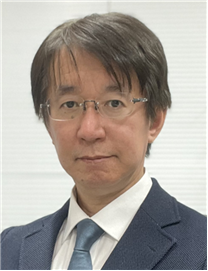
Prof. Fumihito Arai
(Keynote Speaker)
The University of Tokyo, Japan
Keynote Lecture: Grand Challenge on Cybernetic Avatars within the Body
Abstract: For medical and healthcare purposes, small robots have garnered significant attention recently. These robots are designed to autonomously explore the human body's vascular and digestive systems, performing medical procedures and monitoring various healthcare tasks. Further improvements in wireless sensing and actuation methods, communication technologies, and system interfaces are required as design methodologies for small robot systems, necessitating the promotion of innovation in this field. We are promoting a project to develop a cyber-physical system utilizing avatars and small-scale robots within the body that can be operated remotely and safely. We refer to them as In-body cybernetic avatars (In-body CA). In-body CA consists of small robots, a network-connected operating system, and an avatar capable of interacting with users, including information processing, retrieval, and presentation. This enables not only safe monitoring of internal conditions, but also in-body operations including tumor resection, sampling, and pinpoint drug delivery. Improving the operability of teleoperation of these robots enhances safety during operation, such as resection of lesions on the surface of the large intestine. We developed a traction device for endoscopic submucosal dissection and verified its feasibility using prototypes and patient simulators. Furthermore, we have studied non-invasive sampling technologies within the body necessary for biological diagnostics, thereby reducing the burden on patients. Emerging technologies for In-body CA will be introduced, highlighting how they expand capabilities in the microscopic world, particularly within the medical and healthcare fields.
Biography: Fumihito Arai is a full Professor of the Department of Bioengineering, Department of Mechanical Engineering, at The University of Tokyo, Japan. He is mainly engaging in the research fields of bio-robotics, micro- and nano-robotics, micro- and nano-mechatronics, MEMS, and Biomedical applications. He received a Doctor of Engineering degree from Nagoya University in 1993. Since 1998, he has been an Associate Professor at Nagoya University. Since 2005, he has been a Professor at Tohoku University. Since 2010, he has been a Professor at Nagoya University. Since 2020, he has been a Professor at the Department of Mechanical Engineering at The University of Tokyo.
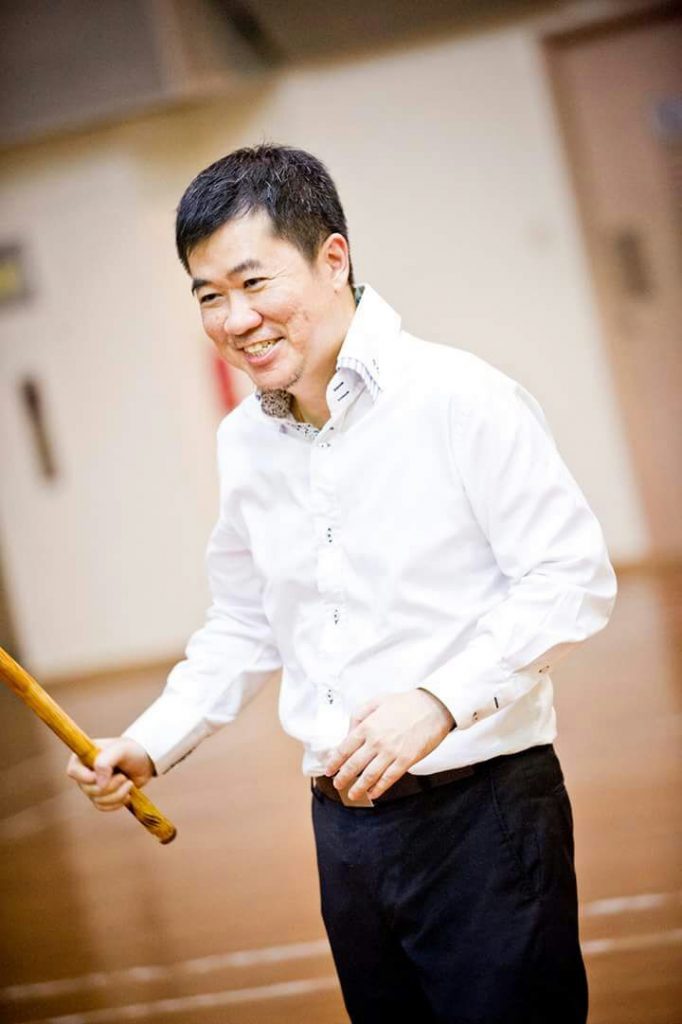
Prof. Chee-Kong Chui
(Keynote Speaker)
National University of Singapore, Singapore
Keynote Lecture: From Medical Robotics to Intelligent Healthcare Systems: Integrating Robotics, AI and Digital Twins
Abstract: Medical robotics is evolving from conventional computer-assisted and teleoperated systems towards increasingly intelligent platforms capable of sensing, reasoning, prediction, and adaptive interaction with clinicians, patients, and complex healthcare processes. This evolution is being accelerated by advances in artificial intelligence, computer vision, biomechanical modelling, digital twins, and increasingly capable robotic and automation technologies. In this talk, I will discuss our work towards intelligent medical and healthcare systems through the integration of robotics, AI, computational modelling, and digital twins. Examples will include image- and vision-guided medical robotics, computational modelling of soft-tissue behaviour, surgical simulation and training, and AI-assisted interpretation of medical and procedural information. I will also discuss how patient- and procedure-specific digital representations can be combined with sensing and robotic systems to support planning, prediction, and intraoperative decision-making. Beyond surgical applications, similar technologies are increasingly relevant to intelligent and high-throughput drug development. I will present our work on robotic laboratory automation and digital-twin-based modelling of complex laboratory workflows, where robotics, AI, process optimisation, and cyber-physical systems can be integrated to improve throughput, resource utilisation, reproducibility, and operational efficiency in pharmaceutical research and development. A key challenge across these applications is how individual algorithms and robotic technologies can be integrated into systems that are reliable, usable, scalable, and practically meaningful. Issues such as real-time performance, physical interaction, uncertainty, human-machine collaboration, workflow optimisation, and translation from laboratory prototypes to real-world healthcare and pharmaceutical environments will therefore be considered. The talk will conclude with perspectives on the progression from robotic assistance towards more context-aware and intelligent healthcare systems, and on the complementary roles of humans, robotics, artificial intelligence, and digital twins in the future of healthcare and drug development.
Biography: Chee-Kong Chui is an Associate Professor in the Department of Mechanical Engineering at the National University of Singapore (NUS), where he also serves as Deputy Head for Undergraduate Programmes and chairs the Department Academic Affairs Committee. He is also a Faculty Member of the Integrative Sciences and Engineering Programme at the NUS Graduate School. His research interests include medical and surgical robotics, computer vision and artificial intelligence for healthcare, medical simulation and training, tissue biomechanics, and intelligent automation. His research focuses on integrating robotics, sensing, computational modelling, and artificial intelligence to develop intelligent systems for healthcare and advanced engineering applications. In medical robotics, his work includes image-guided interventions, robotic surgical assistance, medical simulation, computer-assisted diagnosis and treatment, and biomechanical modelling of soft tissues. He has also worked extensively on cyber-physical systems, digital twins, and AI-enabled automation for advanced manufacturing. He has led and participated in multidisciplinary research projects involving academic, clinical, and industrial collaborators, with an emphasis on translating engineering technologies into practical systems. His current work includes the development of robotic and AI technologies for surgery and healthcare, as well as intelligent robotic automation and digital-twin technologies for complex laboratory and manufacturing environments. Dr Chui is a Senior Member of IEEE and Co-Chair of the IEEE Systems, Man, and Cybernetics Society Technical Committee on Cyber-Medical Systems. He is also active in international conferences and editorial activities in robotics, automation, and medical technologies.
CMRAI Past Speakers
|
|
|
|
Prof. Ruxu Du |
Prof. Rongjing Zhang |
Mr. Yongpeng Qin |
The Secretary office of CMRAI 2025 will collect contributions and finish daily organizing work. If you have any question, please feel free to contact our conference secretary.


Copyright © 2026. All Rights Reserved. CMRAI 2026 ▏ www.cmrai.org